
The ₦10-Per-Litre Excise Duty on Sweetened Beverages: Settled Law, or a Rate About to Change?
Wholesome Legal House Insights | Reviewed and updated July 2026
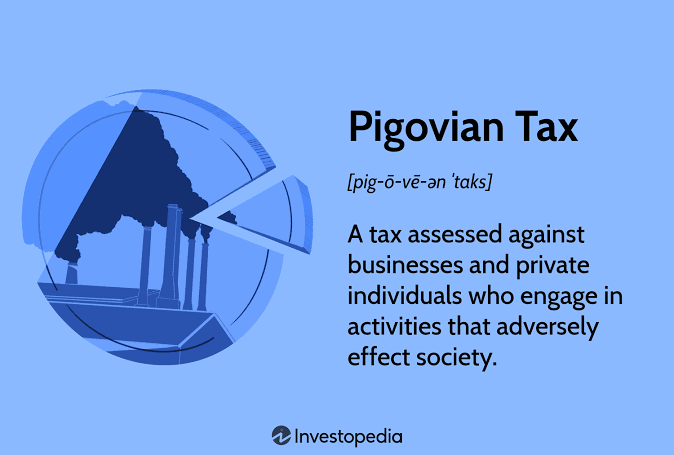
Few tax measures generated as much public debate as the excise duty the Federal Government introduced on non-alcoholic, carbonated and sweetened beverages at the close of 2021. Manufacturers questioned whether the Minister of Finance had overstepped her powers; others asked whether the mechanism used to introduce it — the omnibus Finance Act — was even the right vehicle. Several years on, the duty is still very much the law, though a further change may be on the horizon.
How the Duty Was Introduced
The Finance Act operates as an amending statute: rather than standing alone, each edition alters provisions scattered across more than a dozen existing tax and fiscal laws in one legislative exercise. Section 17 of the Finance Act 2021 used this technique to insert a new subsection (3) into Section 21 of the Customs, Excise
Tariffs, etc. (Consolidation) Act, fixing excise duty on non-alcoholic, carbonated and sweetened beverages at ₦10 per litre. Beverages of this kind were already listed as excisable goods under Section 21(1) and (2) and the Act's existing schedule; the amendment did not create a new category of taxable goods, it simply fixed a rate for one that was already there.
Was It a Constitutional Overreach?
The specific question this firm was asked to consider was whether this new duty amounted to an aberration capable of founding a constitutional challenge, given that fiscal management, taxation policy and government revenue collection fall squarely within the statutory functions of the Ministry of Finance under the Finance (Control and Management) Act 1958. On that basis, the introduction of the duty was, and remains, within the Ministry's lawful remit. A related question — whether the Minister could make further upward revisions administratively, given that only a subsequent Act of the National Assembly can validly amend the Finance Act — was answered by reference to the Finance Act's own list of the legislation it amends (which includes the Customs, Excise Tariffs Act itself, alongside the Capital Gains Act, Companies Income Tax Act, Personal Income Tax Act, Stamp Duties Act, Value Added Tax Act, Insurance Act, National
Agency of Science and Engineering Infrastructure Act, Finance (Control and Management) Act, Federal Inland Revenue Service Act, Fiscal Responsibility Act, and Tertiary Education Trust Fund (Establishment) Act, as listed in Section 1 of the Finance Act 2021): only Parliament, through further legislation, can alter what the Finance Act has fixed. A ministerial regulation may implement and administer an existing rate, but it cannot itself set a new one.
No court has since disturbed either conclusion, and the duty has remained in force, unchallenged in the courts, since 2022.
Where Things Stand in 2026
The rate itself has not moved. As at mid-2026, excise duty on non-alcoholic, carbonated and sweetened beverages — including energy drinks and similar products — is still charged at the original flat rate of ₦10 per litre, a rate that has stayed fixed even as excise duties on alcoholic beverages and tobacco have been increased in stages under successive fiscal policy measures.
That said, change may be coming. Partly in response to World Bank conditions attached to a non-oil revenue reform loan, and partly on public-health grounds, the Senate has been working since 2025 on a bill to amend Section 21(3) of the Customs, Excise Tariffs Act to replace the flat ₦10-per-litre charge with a percentage-based levy tied to the retail price of the product, with part of the proceeds earmarked for health promotion programmes. The bill has passed the Senate but has not yet been signed into law, and manufacturers' associations have raised concerns about its timing given current economic pressures on the sector.
The Practical Takeaway
For now, ₦10 per litre remains the correct figure for costing and compliance purposes, and the constitutional and administrative-law analysis in this firm's original opinion still holds. Businesses in the beverage manufacturing and import sectors should, however, treat the rate as provisional rather than fixed, and should monitor the progress of the pending amendment bill, since a move to a percentage-based levy would materially change costing for higher-value products.
A note on currency of the law
The Customs, Excise Tariffs, etc. (Consolidation) Act, as amended by the Finance Act 2021, remains the governing law, and the ₦10-per-litre rate is unchanged as at mid-2026. This sits alongside — and is unaffected by — the broader Nigeria Tax Act 2025 reforms, which consolidated income-tax-type levies but left customs and excise administration under this separate framework, now administered digitally by the Nigeria Customs Service alongside the Nigeria Revenue Service.
A bill to replace the flat rate with a percentage-based levy on retail price has passed the Senate but had not been signed into law as at the time of writing. This is a live development worth tracking rather than a settled change.
This article is published by Wholesome Legal House for general information purposes only. It is not legal advice, and no solicitorclient relationship arises from reading it. The facts of any specific matter may alter the analysis. For advice on a particular situation, please contact us.